


Can a boxy, trail-ready SUV really sip fuel like a tame commuter without giving up the rugged look that drew you in? At Ron Carter Ford in Alvin, Texas, we help drivers across Houston, Pearland, and League City set realistic expectations for their Bronco Sport fuel economy every day.
The 2026 Bronco Sport is built to go farther off pavement than most compact rivals, yet it still handles Houston freeways and FM roads with ease. Understanding what shapes your real-world MPG helps you choose the right trim, engine, and package from day one.
Key Numbers at a Glance
The 2026 Bronco Sport delivers EPA-estimated 21-25 mpg city and 27-30 mpg highway depending on engine and trim. The 1.5L EcoBoost three-cylinder returns the best efficiency at 25 city / 30 highway. The 2.0L EcoBoost four-cylinder (Badlands only) delivers more power at 21 city / 27 highway. Every trim includes standard all-wheel drive and an 8-speed automatic.
Visit us at 3005 FM 528 Rd, Alvin, TX 77511 or call (281) 331-8111 to compare trims and test-drive for your own real-world MPG.
2026 Ford Bronco Sport Gas Mileage: What to Expect
The EPA provides a baseline for comparing Bronco Sport configurations, but your actual numbers will shift based on driving habits, terrain, and the equipment on your specific vehicle. Here is what the numbers look like before you factor in your commute.
| 2026 Bronco Sport Engine | EPA City (mpg) | EPA Highway (mpg) | EPA Combined (mpg) | Best For |
|---|---|---|---|---|
| 1.5L EcoBoost 3-cylinder (Big Bend, Heritage, Outer Banks) | 25 | 30 | ~27 | Daily commuting, fuel efficiency priority |
| 2.0L EcoBoost 4-cylinder (Badlands only) | 21 | 27 | ~24 | Off-road performance, towing, hill climbs |
| All configurations (overall range) | 21-25 | 27-30 | 24-27 | Reference range when comparing trims |
Highway Testing: Real-World Benchmark
In Car and Driver’s 75-mph highway fuel economy test, a Bronco Sport with the 1.5L engine returned 33 mpg – well above the EPA estimate. That result reflects steady, relaxed highway driving and is a useful upper reference point for long Texas drives on I-45 or US-59. Your everyday highway number will likely land somewhere between the EPA figure and that 33-mpg benchmark depending on your speed and load.
Why Your Results Will Vary
Small changes add up quickly in a boxier SUV with standard AWD. The most common factors that shift your numbers:
- Speed: Faster speeds increase wind resistance sharply. Pushing 75+ mph on the highway versus 65 mph can cost you 3-5 mpg.
- Tires: Aggressive all-terrain tires increase rolling resistance and road noise. Badlands and Heritage models with standard all-terrain tires will typically see lower highway numbers than Outer Banks models on all-season tires.
- Cargo and weight: Extra gear, a loaded bed box, or a heavy cooler makes the engine work harder on grades and from stops.
- Cold weather: Longer warm-up times and denser air reduce efficiency on short trips – this matters during Houston’s occasional cold snaps.
- Terrain and traffic: Stop-and-go on 288 or Beltway 8 will always produce lower numbers than a steady cruise on the highway.
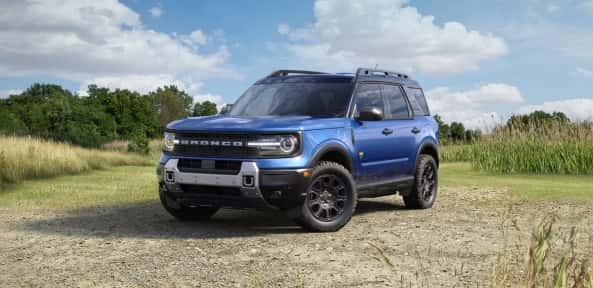
MPG by Engine: 1.5L vs 2.0L EcoBoost
Your engine choice is the single biggest factor in your Bronco Sport fuel economy. Here is how each powertrain performs in practice.
1.5L EcoBoost Three-Cylinder: Best Efficiency
The base 1.5L turbocharged three-cylinder produces 180 hp and 200 lb-ft of torque paired with the 8-speed automatic. EPA estimates are 25 city / 30 highway – the best numbers in the Bronco Sport lineup. Steady speeds and smooth throttle inputs are the key to reaching that 30-mpg highway figure. Car and Driver tested an Outer Banks with the 1.5L at 0-60 mph in 8.2 seconds, which is adequate for highway merges and rewards a smooth driving style.
This engine is the right choice if your priority is daily commuting efficiency, longer road trips across Texas, or keeping monthly fuel costs predictable.
2.0L EcoBoost Four-Cylinder: Power Over Economy
The 2.0L turbocharged four-cylinder delivers 250 hp and 280 lb-ft of torque. It is only available on the Badlands trim. EPA estimates drop to 21 city / 27 highway – a clear tradeoff for the added capability. Car and Driver tested the 2.0L Badlands at 0-60 mph in 5.9 seconds, making short work of highway gaps and loaded towing situations.
If you need real pulling power for trailers, stronger hill-climbing capability, or the confidence of extra torque on technical trails, the 2.0L justifies its efficiency cost.
| Engine | Output | Transmission | EPA City / Highway | 0-60 mph | Best Use Case |
|---|---|---|---|---|---|
| 1.5L turbo three-cylinder with AWD | 180 hp / 200 lb-ft | 8-speed automatic | 25 / 30 mpg | 8.2 sec (Outer Banks) | Commuting, road trips, fuel-conscious driving |
| 2.0L turbo four-cylinder with AWD | 250 hp / 280 lb-ft | 8-speed automatic | 21 / 27 mpg | 5.9 sec (Badlands) | Off-road, towing, performance driving |
How Trim Level and Equipment Affect Bronco Sport Fuel Economy
Choosing a trim is more than picking a look. The weight, tire type, and AWD system all affect how the Bronco Sport performs on your daily drive. Here is how each trim’s standard equipment shapes your real-world MPG.
Big Bend
Standard all-season tires and HOSS 1.0 suspension give this trim the lightest footprint in the lineup. Adding the Black Diamond Off-Road Package brings skid plates, a brush guard, and all-terrain tires – which increases rolling resistance and will lower your real-world MPG slightly. If fuel economy is a priority, keep the stock tires.
Heritage
Standard all-terrain tires on 17-inch Oxford White wheels are part of Heritage’s package from the factory. Expect slightly lower real-world highway numbers than a Big Bend on all-season tires, even with the same 1.5L engine. The tradeoff is better grip on loose Texas surfaces.
Outer Banks
All-season tires and an appearance-focused equipment list make Outer Banks the most efficiency-friendly higher trim. Larger 18-inch wheels add a small amount of rotating mass but the impact on MPG is minimal in everyday driving. The available Tech Package+ and Sasquatch Package can add weight and rolling resistance if you go that route.
Badlands
The 2.0L EcoBoost, HOSS 2.0 off-road suspension, enhanced AWD with twin-clutch rear drive unit, and standard all-terrain tires all contribute to lower EPA numbers. This is the price of the most capable hardware in the lineup. If you do not need trail-ready equipment daily, a lighter trim may better match your fuel budget.
Off-Road Packages and the Sasquatch Effect on MPG
The Sasquatch Package is available on Outer Banks ($3,535) and Badlands ($2,990). It adds bigger knobby all-terrain tires, HOSS suspension upgrades, steel protection hardware, and recovery hooks. All of that hardware adds weight and rolling resistance. Expect lower highway MPG compared to the same trim without the Sasquatch Package – most noticeably at steady highway speeds where the extra drag has nowhere to hide.
The Bronze Package available on Big Bend and Badlands adds 17-inch bronze-finished wheels and interior accents. Appearance packages like this have a minimal direct effect on fuel use unless they pair with heavier tires or protection hardware.
G.O.A.T. Modes: Use Eco for Daily Driving
Eco mode is the smart pick for commuting and steady highway driving. It delivers calmer throttle response and smoother power delivery – both of which help you reach and sustain better fuel economy. Save the terrain-specific modes (Sand, Mud/Ruts, Rock Crawl) for when you actually need them. Using those modes on the highway will not hurt MPG significantly, but they are not designed to optimize efficiency.
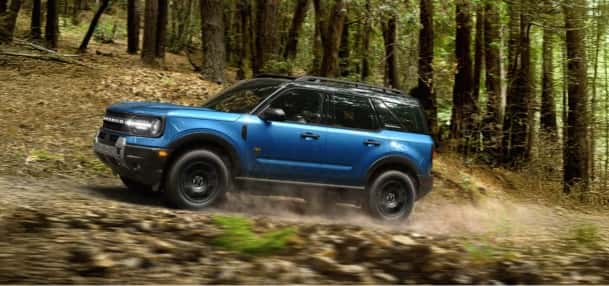
Towing and Fuel Economy: What to Expect
Adding a trailer changes how your Bronco Sport moves and how hard the engine works. Even a small trailer increases drag and load, which lowers MPG noticeably. Plan for a range rather than a single number when towing.
| Bronco Sport Setup | Max Tow Rating | Efficiency Impact | Best Towing Strategy |
|---|---|---|---|
| 1.5L EcoBoost | Up to 2,200 lbs | Expect noticeable MPG drop near max capacity; more frequent downshifts on grades | Keep trailers light, maintain steady speed, avoid hard acceleration |
| 2.0L EcoBoost (Badlands) | Up to 2,700 lbs | More confident towing with less strain, but speed and wind still cause significant mpg loss | Use cruise control on the highway; check trailer tire pressure before every trip |
Smart towing habits that limit the fuel penalty: keep your speed steady, leave extra following distance, roll into the throttle instead of punching it, and remove any unnecessary cargo from both the Bronco Sport and the trailer before you hitch up.
Practical Fuel-Saving Tips for Your Bronco Sport
These habits make a real difference on Houston commutes and Texas road trips alike.
Use Eco Mode Daily
Switch to Eco for your commute. Calmer throttle response and smoother power delivery help you stretch each gallon on stop-and-go roads and steady highway cruising.
Check Tire Pressure Monthly
Check when tires are cold and follow the door sticker recommendation. Properly inflated tires reduce rolling resistance and improve steering – both of which directly support better fuel economy.
Remove Unused Roof Gear
Roof racks and cargo boxes create significant aerodynamic drag at highway speed. Remove them when not in use – the improvement is most noticeable on longer drives at 60+ mph.
Keep Up With Maintenance
Fresh oil, a clean air filter, and good spark plugs keep combustion efficient. Follow Ford’s service intervals and schedule maintenance at Ron Carter Ford’s service center.
Manage Highway Speed
Driving at 65 mph instead of 75+ mph can recover 3-5 mpg on open Texas highways. The aerodynamic penalty on a boxy SUV is steeper than most drivers expect – use cruise control to hold a consistent speed.
Pack Smart, Drive Light
Extra weight costs you at every hill and from every stop. Clear out gear you are not actively using and load heavy items low and centered in the cargo area to reduce sway and drag on road trips.
Test Drive for Your Real-World MPG at Ron Carter Ford
The best way to know what fuel economy you will actually see is to drive your usual route. When you visit us in Alvin, bring your daily commute in mind – ask to drive on roads similar to your regular drive, and try both the 1.5L and 2.0L if you are deciding between Outer Banks and Badlands.
We will walk you through the tire choices, off-road packages, and equipment that affect your numbers. Whether you want the most efficient Bronco Sport or the most capable one, we will help you find the right balance for your budget and lifestyle.
Call us at (281) 331-8111 or visit us at 3005 FM 528 Rd, Alvin, TX 77511.
