


How to Maximize Tax Savings When Buying a Ford Work Truck
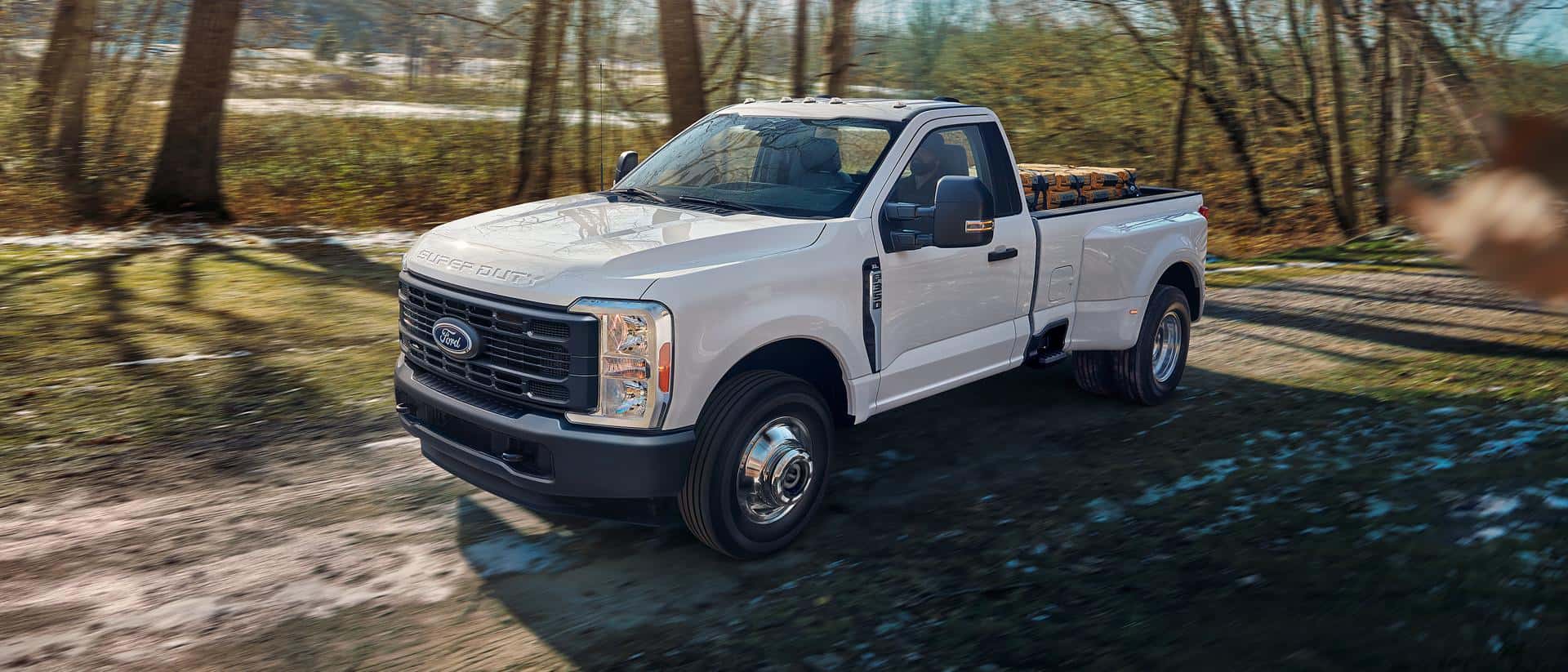
Maximize Tax Savings on a Ford Work Truck: Business owners can deduct up to $1,220,000 to $1,250,000 of qualifying Ford work truck purchases in the first year of business use through Section 179 deductions. Vehicles over 6,000 pounds GVWR receive enhanced tax treatment, and combining Section 179 with bonus depreciation of 40% in 2025 creates even greater savings. Both new and financed vehicles qualify, but the truck must be purchased and placed in service by December 31st with at least 50% business use.
Disclaimer: This article is for informational purposes only. It does not offer tax, legal, or financial advice. Tax laws change often, and each person’s situation is different. Always talk to a qualified tax professional or CPA before making any decisions based on tax benefits.
What if your next commercial vehicle purchase could cut your tax bill by thousands of dollars in the first year alone?
Many business owners miss out on powerful tax opportunities when upgrading their fleet. Your Ford work truck isn’t just a tool for your construction, landscaping, delivery, or transportation business. It’s a strategic investment that can put real money back in your pocket.
Federal tax incentives make it possible to maximize tax savings on a Ford work truck. You can deduct up to $1,220,000 to $1,250,000 of qualifying vehicle purchases in your first year of business use. This applies to new trucks and used vehicles when you place them in service by December 31st.
Understanding commercial vehicle tax deductions opens doors to substantial savings. Whether you run a small operation or manage a larger fleet, small business vehicle tax benefits can transform how you handle equipment purchases and your overall tax strategy.
Ron Carter Ford in Alvin, Texas specializes in helping business owners like you navigate these tax advantages. Our team understands the weight classifications, commercial capabilities, and federal requirements that make Ford trucks perfect for maximizing your deductions. We’ll guide you through the entire process so you can make smart purchasing decisions that benefit your bottom line. Call us at 346-603-5317 to get started.
Understanding Section 179 Deduction for Your Ford Work Truck Purchase
The Section 179 deduction for Ford trucks is a big tax benefit for business owners. It lets you deduct the full cost of qualifying business vehicles in one year. Knowing how this works can save your business a lot of money.
The weight of your vehicle is key to your tax savings. Trucks over 6,000 pounds get special tax treatment under Section 179. The heavier your truck, the more you can deduct.
What Qualifies as a Commercial Vehicle Under Section 179
A commercial vehicle must be bought for business use. It must weigh over 6,000 pounds to get the best tax benefits. This rule separates business vehicles from personal cars.
Your Ford work truck must meet certain criteria for a heavy vehicle tax deduction. The weight of your truck determines how much you can deduct:
- Vehicles under 6,000 pounds GVWR: Limited deductions available
- Vehicles 6,000-14,000 pounds GVWR: Up to $31,300 deduction limit for 2025
- Vehicles over 14,000 pounds GVWR: Up to $1,250,000 full deduction
Eligible Ford Trucks and Their Weight Classifications
Ford has many models that qualify for the Section 179 deduction. These range from light-duty trucks to heavy commercial units. Each model offers different benefits based on its weight and business use.
| Ford Model | GVWR Range | Business Use Application | Tax Deduction Category |
|---|---|---|---|
| F-150 | 6,000-8,600 lbs | Light hauling, crew transport, towing | $31,300 limit (2025) |
| F-150 Lightning | 6,000-8,500 lbs | Eco-friendly commercial work, electric services | $31,300 limit (2025) |
| F-250 Super Duty | 9,900-14,000 lbs | Heavy hauling, construction, towing | $31,300 limit (2025) |
| F-350 Super Duty | 14,000+ lbs | Heavy equipment transport, commercial construction | Full deduction up to $1,250,000 |
| Transit Van | 8,850-14,080 lbs | Mobile business, delivery, crew transport | $31,300 limit (2025) |
| Expedition | 6,000-7,700 lbs | Business transport, crew hauling | $31,300 limit (2025) |
| Explorer | 4,800-5,600 lbs | Limited business use, executive transport | Limited deduction options |
The Ford F-350 Super Duty is a top choice for maximizing your tax write-off. Its weight over 14,000 pounds makes it eligible for the full deduction.
Business Use Requirements and Documentation
Your vehicle must be used for business at least 50 percent of the time to qualify. This 50 percent rule is key to meeting Section 179 requirements.
You need to keep detailed records of your vehicle’s use:
- Maintain a mileage log showing business versus personal trips
- Document business trip dates, locations, and purposes
- Keep purchase invoices and financing agreements
- Record the date the vehicle was placed in service
- Track actual business use percentages throughout the year
Your tax deduction amount will match your business use percentage. If you use your vehicle 75 percent for business, you can deduct 75 percent of the purchase price.
The vehicle must be purchased and in service before December 31st of the tax year you claim the deduction. Both new and used Ford trucks qualify equally under Section 179. Financed vehicles work the same as purchased vehicles, but leased vehicles do not qualify for this deduction.
Working with our team at Ron Carter Ford, experienced in commercial tax benefits, helps you find the right vehicle. We can explain how each model’s weight affects your tax situation. Call us at 346-603-5317 to discuss your options.

Tax Savings Through Bonus Depreciation and Deduction Strategies
You want to get the most from your work truck investment. Good news is that combining Section 179 deductions with bonus depreciation creates powerful tax advantages for your business. These strategies work together to reduce your taxable income and put money back in your pocket.
Bonus depreciation gives you an extra 40% deduction on vehicle costs that go beyond Section 179 limits in 2025. This means you can claim significant deductions on your Ford work truck purchase. When you combine both strategies, you unlock tax savings that most business owners don’t realize are available to them.
How These Tax Strategies Work Together
Your path to maximum savings starts with understanding how these deductions layer. You can claim up to $1,250,000 under Section 179 in 2025. Any amount over that limit qualifies for the 40% bonus depreciation work trucks deduction. This two-step approach is valuable when buying multiple vehicles or investing in premium trucks.
Consider a Ford F-150 business expense scenario. You purchase a new F-150 for $65,000 and use it 100% for business. You claim the full amount under Section 179 up to your limit. If you’re buying beyond that threshold, the remaining cost gets the 40% bonus depreciation treatment. This layering approach maximizes your total deductions.
The Ford Super Duty tax savings potential is even greater. Heavy-duty trucks qualify for higher Section 179 limits. A Ford Super Duty truck used exclusively for business can generate substantial tax write-offs when you apply both deduction strategies correctly.
Important Details About Your Purchase
- Finance your truck purchase through a dealer like Ron Carter Ford—financing still qualifies for both deductions
- Place your vehicle in service before December 31st to claim deductions in that tax year
- Leasing does not qualify for Section 179 or bonus depreciation, so purchasing is the smarter tax choice
- Both new and used vehicles qualify for these deductions
- Business use percentage affects your total deduction amount
Deduction Comparison Chart
| Tax Strategy | Maximum Deduction (2025) | When It Applies | Vehicle Types Eligible |
|---|---|---|---|
| Section 179 | $1,250,000 | Vehicles under phase-out threshold of $3,130,000 | New and used trucks |
| Bonus Depreciation | 40% of remaining costs | Amounts exceeding Section 179 limits | New and used trucks |
| Combined Approach | Up to $1,250,000 plus 40% on excess | Optimal for high-value purchases | Ford F-150, Super Duty, and other commercial vehicles |
Strategic Planning for Your Business
Your timing matters. Purchasing and placing your truck in service before year-end locks in current-year deductions. If you’re considering multiple vehicle purchases, coordinating them strategically keeps you within the $3,130,000 phase-out threshold.
Work with your tax advisor to determine the best split between Section 179 and bonus depreciation for your specific situation. A landscaping company buying several Ford F-150 trucks can structure purchases differently than a contractor investing in a single Ford Super Duty. Your business goals shape your strategy.
We understand these tax advantages at Ron Carter Ford and can help you structure your purchase to maximize benefits. Our financing options work seamlessly with both deduction strategies, making it easy to invest in the work truck your business needs while capturing every available tax savings opportunity.
How Ron Carter Ford in Alvin, TX Can Help You Navigate Commercial Vehicle Tax Benefits
Buying a Ford work truck is a big decision for your business. Ron Carter Ford, the most trusted Ford dealer in Alvin, TX and greater Houston, understands the tax benefits you need. Our experienced sales team knows Section 179 deductions and bonus depreciation inside and out. We can quickly match you with vehicles from our inventory that qualify for maximum tax savings on your work truck purchase.
Your business deserves a partner who gets the details right. We provide all the documentation your accountant needs for tax filing. We supply vehicle specifications with GVWR information that’s critical for your tax records. Our team works with your schedule to ensure your new Ford work truck is delivered and placed in service before the December 31st deadline. We carry the full range of qualifying Ford commercial vehicles, from the F-150 and powerful F-250 and F-350 Super Duty trucks to the Transit vans and capable Expedition and Explorer SUVs.
Our financing team at Ron Carter Ford knows how different purchase structures affect your ability to maximize tax savings on Ford work truck deals. We explain how various options work with Section 179 requirements and help structure your deal to fit your business budget. While we provide helpful guidance on tax benefits, we always recommend consulting with your tax advisor about your specific situation.
Ready to start your journey toward maximizing tax savings on your next Ford work truck? Contact Ron Carter Ford today at 346-603-5317 or visit us at 3005 FM 528 Road, Alvin, Texas 77511. Our knowledgeable team is ready to explore your business needs, show you qualifying vehicles, and help you discover real savings. Whether you’re purchasing your first commercial vehicle or expanding your fleet, Ron Carter Ford has the expertise and commitment to make it happen.
FAQ
What is Section 179 and how does it help me save on my Ford work truck purchase?
Section 179 is a tax code that lets you deduct the full cost of qualifying business equipment in one year. This includes commercial vehicles like Ford work trucks. By using Section 179, you can deduct up to $1,250,000 in qualifying equipment purchases. This means you keep more money in your business.
Instead of spreading deductions over years, you can claim the entire purchase price immediately. Your vehicle must meet specific weight requirements and be used for business at least 50% of the time. This can significantly reduce your tax liability in the year you purchase your truck.
Which Ford trucks qualify for Section 179 deductions, and why does vehicle weight matter?
Vehicle weight is key because it determines the deduction limits under Section 179. Ford trucks fall into three categories based on GVWR. Vehicles over 14,000 lbs GVWR qualify for the full $1,250,000 deduction.
Heavy-duty trucks and SUVs between 6,000-14,000 lbs GVWR are limited to $31,300. Lighter vehicles under 6,000 lbs are limited to $20,400. Ford’s qualifying commercial vehicles include the F-250 Super Duty, F-350 Super Duty, and F-450. They also include the F-150 with select configurations, the F-150 Lightning electric truck, Transit vans, and SUVs like the Expedition and Explorer.
Our inventory includes all these models. Our sales team can quickly identify which vehicles meet your weight classification needs for maximum tax benefits.
What percentage of business use do I need to claim a Section 179 deduction on my Ford truck?
Your Ford work truck must be used for business at least 50% of the time to qualify for any Section 179 deduction. The actual deduction scales based on your business use percentage. For example, if you purchase a Ford F-250 for $45,000 and use it 80% for your construction business, you can deduct $31,300 (the heavy-duty limit) multiplied by your 80% business use rate.
The remaining 20% is considered personal use and doesn’t qualify. This is why maintaining detailed documentation is absolutely critical—you’ll need mileage logs, business trip records, purchase invoices, and financing agreements to substantiate your business use percentage if the IRS ever audits your return. The December 31st deadline is also crucial: your vehicle must be placed in service (meaning actively used in your business) by year-end to claim the deduction in that tax year.
Can I claim Section 179 deductions if I finance my Ford truck, or do I need to pay cash?
You absolutely do not need to pay cash to claim Section 179 deductions—financed vehicles qualify just as readily as cash purchases. Whether you secure financing through Ron Carter Ford or another lender, the deduction is available to you in the year you purchase and place the vehicle in service. This is one of the most important points to understand because it means you can acquire the commercial vehicles your business needs without depleting your cash reserves.
In fact, financing is often the smarter strategy because it preserves working capital while still allowing you to claim the full tax deduction. What doesn’t qualify is leasing—if you lease a Ford truck instead of purchasing it, you cannot claim Section 179 deductions on the vehicle cost itself. This is why purchasing (with or without financing) provides superior tax advantages compared to leasing arrangements.
How does bonus depreciation work alongside Section 179 to maximize my tax savings?
Bonus depreciation works as a complementary strategy to Section 179, allowing you to claim even greater tax deductions on your Ford work truck purchase. While Section 179 lets you deduct up to $1,250,000 in qualifying equipment, bonus depreciation provides an additional 40% deduction on any remaining vehicle cost that exceeds your Section 179 deduction limit.
Here’s a practical example: imagine you purchase a Ford F-250 Super Duty for $60,000 and use it 100% for your construction business. You can claim the full $31,300 Section 179 deduction (the heavy-duty truck limit), then apply 40% bonus depreciation to the remaining $28,700, which equals an additional $11,480 deduction. The combination of these two strategies creates substantial tax savings. This approach is valuable when you’re purchasing multiple vehicles or investing in high-value trucks like the Ford Super Duty series.
Strategic timing also matters—both deductions must be claimed in the tax year your vehicle is placed in service, which is why purchasing before December 31st is so important for maximizing current-year benefits.
What documentation do I need to provide for my Section 179 deduction claim?
To successfully claim your Section 179 deduction on your Ford work truck, you’ll need to gather and maintain comprehensive documentation. This includes your purchase invoice showing the vehicle cost and GVWR (critical for proving weight classification), your financing agreement if applicable, mileage logs documenting your business versus personal use, business trip records showing the purpose of vehicle usage, and your tax filing records for the year of purchase.
We provide detailed vehicle specifications including GVWR information on all commercial vehicles in our inventory, and we supply all necessary purchase documentation and invoices needed for your tax filing. This documentation is essential not only for filing your initial return but also for supporting your deduction if the IRS requests substantiation. Your tax advisor will help you organize this information and determine the correct percentage of business use to claim. Many business owners maintain a dedicated business use log throughout the year, recording mileage, trip purposes, and dates to ensure accuracy and defensibility.

0 comment(s) so far on How to Maximize Tax Savings When Buying a Ford Work Truck